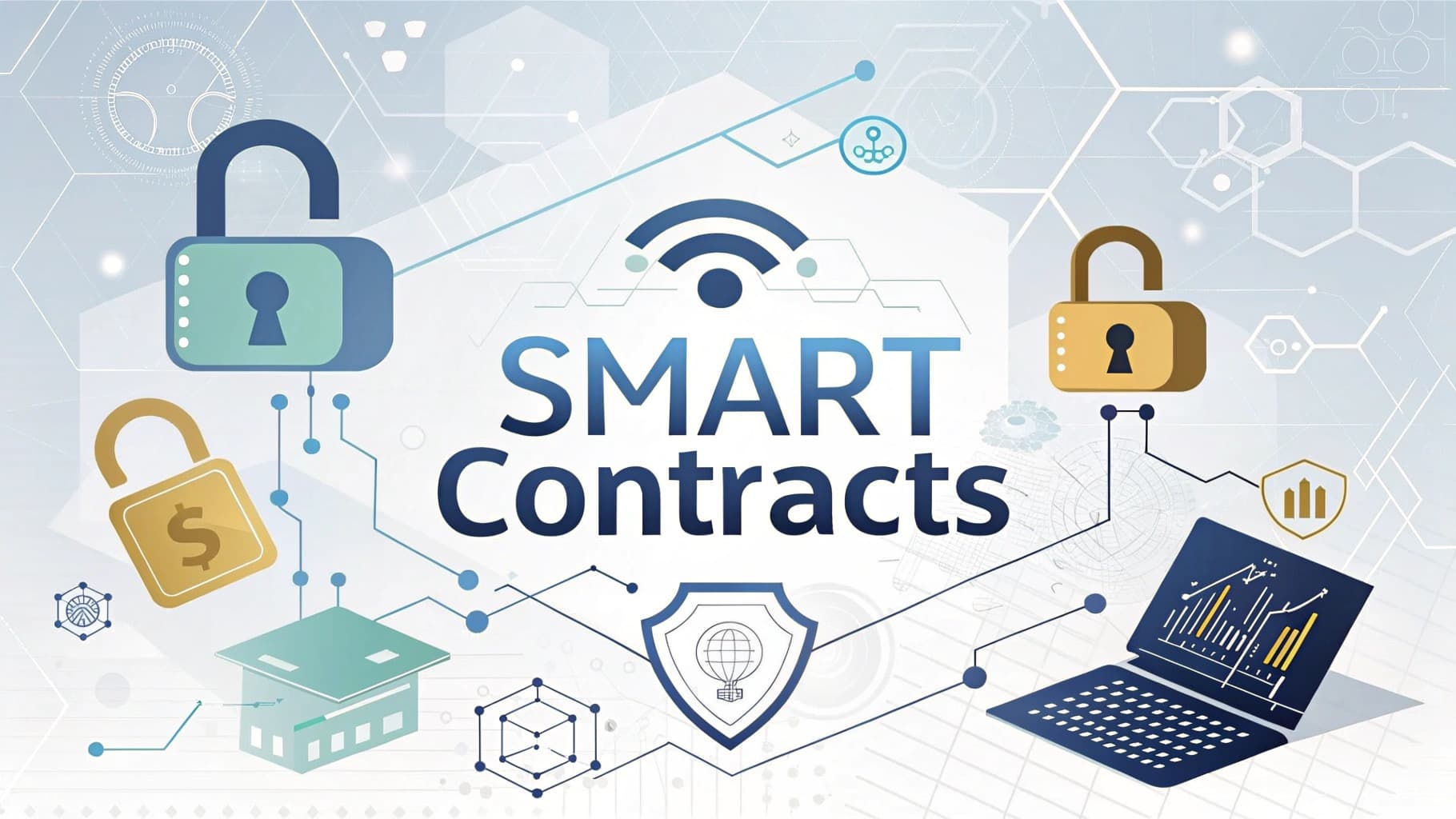
Smart Contracts in Pakistan Opportunities & Legal Considerations
Smart Contracts in Pakistan: Opportunities & Legal Considerations
By Dreams Lab
In a world where paperwork delays deals and trust issues stall growth, smart contracts offer a bold new alternative — agreements that self-execute when conditions are met, without intermediaries.
Powered by blockchain technology, smart contracts are digital agreements written in code — enforceable, transparent, and tamper-proof. While globally they’re redefining industries from real estate to finance, in Pakistan, smart contracts are still in their infancy — but full of potential.
At Dreams Lab, we explore future-facing tech with local context. In this post, we break down the opportunities and legal realities of using smart contracts in Pakistan — for businesses, startups, and innovators ready to build trust at scale.
🤖 What Are Smart Contracts?
A smart contract is a blockchain-based program that automatically executes when predefined conditions are met.
Think of it like this:
If A sends 5 ETH to B by Tuesday → then release ownership of the domain name to A.This agreement, once coded and uploaded to a blockchain (e.g., Ethereum, Solana), doesn’t require a third party, lawyer, or platform to enforce it.
- ✅ Tamper-proof
- ✅ Transparent
- ✅ Auto-executing
- ✅ Immutable
📌 These features make smart contracts a powerful tool — especially in environments where trust, paperwork, or enforcement are major bottlenecks.
💼 Business Opportunities for Smart Contracts in Pakistan
Although regulatory ambiguity still exists, use cases are already emerging across industries:
🏡 1. Real Estate Transactions
Buying property in Pakistan is often complex — with manual documentation, fraud risk, and reliance on brokers.
Smart contracts can simplify:
- Escrow handling (funds released only when papers are verified)
- Tokenization of property (fractional ownership)
- Transparent land registry (via blockchain)
📍 Opportunity: Digitize and de-risk the property buying process in Karachi, Lahore, Islamabad, and beyond.
💸 2. Freelance and Remote Work Payments
Pakistan is the 4th largest freelancer market in the world, but payment delays and disputes are common.
Smart contracts enable:
- Milestone-based payments
- Automatic payout on delivery approval
- Dispute resolution mechanisms coded into contracts
💡 Freelancers could build trust-based workflows without relying on platforms like Upwork or Fiverr.
📦 3. Supply Chain & Import/Export Agreements
Imagine a smart contract that:
- Automatically pays a vendor when goods reach Karachi port
- Notifies all parties with real-time blockchain-stamped logs
- Reduces customs-related disputes
⛓️ For a country reliant on imports and exports, blockchain-based contracts can ensure accountability and auditability across the supply chain.
💳 4. Insurance & Microfinance
Pakistan’s insurance penetration is low (~1%), mainly due to distrust and slow claims processing.
Smart contracts can:
- Auto-approve claims based on weather data or flight delay APIs
- Disburse micro-loans when criteria (e.g., mobile usage, repayment) are met
- Reduce admin costs and fraud
🎯 Opportunity: Use DeFi + smart contracts to serve underbanked communities in rural areas.
🎨 5. Digital Asset Ownership & NFTs
Artists, musicians, and creators can use smart contracts to:
- Prove digital ownership
- Receive royalties every time their NFT resells
- Sell exclusive access or services directly
📲 Pakistan’s growing creator economy can leverage smart contracts to protect IP rights and automate revenue.

⚖️ Legal & Regulatory Considerations in Pakistan
While the technology is promising, the legal framework in Pakistan has not yet fully embraced blockchain or smart contracts. Here are the key concerns:
1. Is a Smart Contract Legally Binding?
Under Pakistan’s Contract Act, 1872, a contract is valid if:
- There is offer and acceptance
- There is lawful consideration
- Both parties are competent
- The object is lawful
✅ Technically, a smart contract could meet these conditions. But:
- Lack of legal precedent: No court has ruled on smart contract enforceability yet.
- Digital signatures and e-documents are still evolving in Pakistani law.
📌 Conclusion: Smart contracts aren’t explicitly illegal — but they aren’t explicitly protected either.
2. Crypto Regulations Impact Smart Contracts
Since smart contracts often rely on cryptocurrencies like Ethereum:
- SBP (State Bank of Pakistan) currently bans crypto trading
- Startups using blockchain need legal workarounds (e.g., using stablecoins, private chains)
⚠️ Projects relying on public blockchains must tread carefully or work with legal experts to stay compliant.
3. Jurisdiction & Enforcement Challenges
What happens if a party violates a smart contract?
- How will it be enforced in a Pakistani court?
- Can a judge read Solidity (the language used to write smart contracts)?
- Who is liable if the code has bugs?
🚨 Until frameworks are clarified, smart contracts may serve as supporting documents — not legal replacements.
4. Cybersecurity & Consumer Protection
Bugs in code = vulnerabilities in execution. There must be:
- Legal clauses for error handling
- Fallback processes if automation fails
- Ethical coding practices for public-facing tools
🔐 Regulation around smart contracts must evolve to protect users from malicious or flawed code.
🧩 Workarounds & Hybrid Approaches
Until Pakistani law catches up, here’s how businesses can begin using smart contracts responsibly:
- ✅ Use private blockchains (Like Hyperledger or Corda) where permissions, nodes, and data are tightly controlled.
- ✅ Draft a parallel legal contract to support the smart contract with real-world enforceability.
- ✅ Start with low-risk automation (e.g., milestone payments, notifications) instead of high-value asset transfers.
🇵🇰 The Future of Smart Contracts in Pakistan
We’re at an inflection point. As Pakistan pushes for:
- Digital identity systems (NADRA integrations)
- E-governance
- Startup policy development
- Cross-border tech investments
Smart contracts could become an essential part of:
- Real estate digitization
- B2B trade finance
- Government procurement
- Supply chain traceability
- Web3-native products and IP rights
🧠 With clear regulation and smart implementation, Pakistan could lead in Islamic-compliant, smart contract-based systems globally.
💡 How Dreams Lab Can Help
At Dreams Lab, we:
- Design smart contract architecture for use in real estate, logistics, and digital assets
- Provide blockchain consulting for startups and businesses
- Help bridge the gap between legal frameworks and smart contract logic
- Develop NFT, DeFi, and automation tools tailored to the Pakistani market
We believe smart contracts are the next layer of digital trust — and we’re building toward that future.
Final Thoughts
Smart contracts offer speed, transparency, and automation — a powerful trio for any economy, especially one like Pakistan’s that’s embracing digitization.
But with opportunity comes responsibility. Legal ambiguity, technical challenges, and trust-building must go hand-in-hand. Those who understand the space — and build carefully within it — will be the pioneers of Pakistan’s Web3 transformation.
🚀 Ready to Explore Smart Contracts?
Let’s discuss how your business can integrate blockchain automation, reduce friction, and stay future-proof — legally and technically.
🔄 Bonus for Instagram:
Caption Idea:
Tired of slow contracts and legal drama?
Say hello to smart contracts — automated, transparent, and fraud-resistant.
From real estate to freelancing, here’s how Pakistan can ride the Web3 wave 🌐
📲 DM us @dreamslab.pk to build your first smart contract!
Hashtags
#SmartContracts #BlockchainPakistan #PakStartups #LegalTech #Web3PK #DreamsLab #DigitalPakistan #AIxBlockchain #Web3ForBusiness #NFTPakistan #CryptoLegal